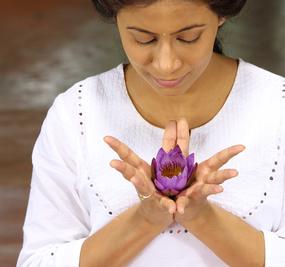


Ananya sat slumped in the corner of the studio, clutching a cup of lukewarm chamomile tea like a life raft. Her eyes were red, her shoulders hunched forward into a tight protective shell. “I tried three different break-up playlists, deleted my socials, and ate an entire tub of dark chocolate gelato,” she sighed as Raghav, a senior trainer at the Sri Sri School of Yoga, pulled up a cushion nearby. “Why does my chest literally ache? It feels like an actual physical weight.”
Ananya sat slumped in the corner of the studio, clutching a cup of lukewarm chamomile tea like a life raft. Her eyes were red, her shoulders hunched forward into a tight protective shell.
Raghav smiled with quiet empathy. “Because emotional stress isn’t just a mental concept, Ananya. When your heart hurts, your nervous system registers it as a physical event. You hunch over to protect your heart chakra (Anahata), your breath gets shallow, and your body stores that grief in your tissues.”
“So chocolate isn’t going to fix my vagus nerve?” she asked, half-laughing, half-tearing up.
“Sadly, no,” Raghav chuckled gently. “But conscious movement, deep breathwork, and stillness can. You don’t need to force yourself to ‘move on’ today. You just need to roll out your mat, open your chest, and let your body process what your mind is struggling to digest.”
Navigating a painful breakup or severe emotional loss leaves you feeling drained, anxious, and physically tight. Practicing targeted yoga for heartbreak, restorative postures (asanas), soothing breathwork (pranayama), and guided meditation provides a holistic path to process emotional pain, regulate your nervous system, and restore inner stability.
In this article:
- What really happens in your body when your heart “breaks”
- What the Yoga Sutras said about heartbreak, long before cardiology caught up
- The specific poses that help, and why, mechanism by mechanism
- How pranayama calms an agitated nervous system
- A quick-reference practice table
- Wisdom from Gurudev Sri Sri Ravi Shankar
- Answers to the questions people usually ask next
What Actually Happens in Your Body When Your Heart “Breaks”?
Heartbreak isn’t only a metaphor. Cardiologists have a real diagnosis for it: takotsubo cardiomyopathy, widely known as broken heart syndrome, in which the heart’s main pumping chamber temporarily balloons and weakens after a wave of intense emotional or physical stress. It’s named after the round-bottomed pot Japanese fishermen once used to trap octopus, because that’s the shape the ailing heart takes on an echocardiogram.
Research tracking these cases has found that a clear emotional trigger — grief, an argument, a separation — precedes the episode in roughly seven out of ten patients, usually within 24 hours. It mostly resolves within weeks and isn’t typically life-threatening, but it’s hard proof that emotional pain travels through the same nervous system that runs your heartbeat and your breath. Cardiac researchers at NYU are now formally studying whether a structured deep-breathing practice can help protect people who’ve already had one episode from having another — which is, essentially, the working theory yoga has operated on for thousands of years.
What Do Ancient Wisdom and Modern Science Say About Emotional Grief?
In Vedic literature and classical texts like Patanjali’s Yoga Sutras, emotional pain and attachment are explored through the concept of Kleshas—specifically Raga (attachment to past pleasure) and Abhinivesha (fear of loss or fundamental instability). Yoga Sutra 1.31 lists duhkha (pain), daurmanasya (mental dejection), angamejayatva (trembling of the body), and irregular breath as the natural companions of a disturbed mind.
Ancient yogic tradition teaches that emotional sorrow gets trapped in the Anahata Chakra (heart center), causing individuals to instinctively curl inward, compress their breathing, and restrict energy flow (Prana).
Modern scientific research validates this mind-body connection. Neurobiological studies reveal that rejection and emotional grief activate the exact same brain regions—such as the dorsal anterior cingulate cortex—that process physical pain (Source: Proceedings of the National Academy of Sciences on PMC).
Additionally, severe emotional distress triggers a surge of stress hormones like cortisol and adrenaline, throwing the autonomic nervous system into chronic sympathetic overload. Clinical research confirms that gentle yoga and conscious diaphragmatic breathing increase vagal tone, activate the parasympathetic nervous system, and lower heart rate variability markers associated with anxiety (Source: International Journal of Yoga on PMC).
Sage Patanjali’s answer, across the Yoga Sutras, was never to suppress these signs but to steady the breath and the posture until the mind quietens in response — which is exactly the logic behind pairing gentle asana with pranayama when the heart is hurting, rather than reaching for distraction.
Which Yoga Poses Help Release Emotional Heartbreak?
When you are grieving, aggressive or highly demanding workouts can sometimes feel overwhelming. A restorative sequence focused on opening the chest, relaxing the hips, and extending the spine encourages gentle physical and emotional release.
| Asana Name | English Name | Emotional & Physical Benefit |
| Matsyasana | Fish Pose | Expands the thoracic cavity, opens the heart center, and relieves respiratory constriction. |
| Bhujangasana | Cobra Pose | Gently opens the chest while strengthening the back, counteracting hunched posture. |
| Anahatasana | Heart-Melting Pose | Relieves upper back tightness, stretches shoulders, and releases subconscious emotional armor. |
| Supta Baddha Konasana | Reclined Bound Angle Pose | Opens the hips where emotional tension accumulates, promoting deep parasympathetic rest. |
| Balasana | Child’s Pose | Provides a safe, grounding posture that calms an overactive nervous system and quietens racing thoughts. |
How Do Pranayama and Meditation Calm a Broken Heart?
Physical postures prepare your body, but breathwork (pranayama) and meditation directly soothe your subtle energy and mind:
- Nadi Shodhana (Alternate Nostril Breathing): This balancing pranayama harmonizes the left and right hemispheres of the brain, reduces racing thoughts, and cools emotional volatility.
- Bhramari Pranayama (Bee Breath): The soothing vibration created during Bhramari stimulates the vagus nerve, calming the heart rate and releasing tension from the jaw and forehead.
- Guided Meditation & Yoga Nidra: Resting in structured meditation allows you to observe painful feelings without being swept away by them, cultivating Vairagya (dispassion) and deep self-compassion.
“Love is not an emotion; it is your very existence. When you realize your true nature is peace, emotional storms lose their power to shake you.”
— Gurudev Sri Sri Ravi Shankar
How Does Sri Sri Yoga Support Emotional Healing?
Healing from emotional turmoil requires a compassionate environment, authentic instruction, and a supportive community. The Sri Sri School of Yoga offers holistic online yoga classes, immersive retreats, and internationally recognized Yoga Teacher Training Courses (TTC). These programs go beyond mere physical exercise, teaching the deeper spiritual and psychological tools of yoga to help individuals build mental resilience and inner peace.
Reclaim Your Inner Peace and Balance
Healing a broken heart takes patience, care, and a willingness to honor your feelings rather than running from them. By committing to a simple daily practice of restorative postures, calming breathwork, and quiet reflection, you can gently release emotional pain and rediscover your inherent strength.
If you are ready to deepen your personal practice or help others navigate life’s challenges through authentic yogic wisdom, explore the globally accredited programs at the Sri Sri School of Yoga. Start your path toward emotional balance and self-discovery today.