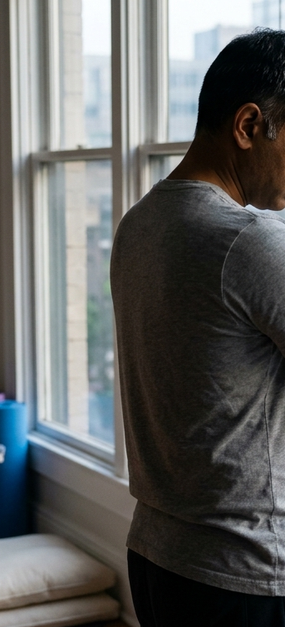


Meet Rohan. Rohan is a high-flying marketing executive who spends ten hours a day staring at a blue-light screen and living off cold espresso. One morning, he looked in the mirror and realised his face looked exactly like his crumpled linen shirt, grey, tired, and lacking any “life.”
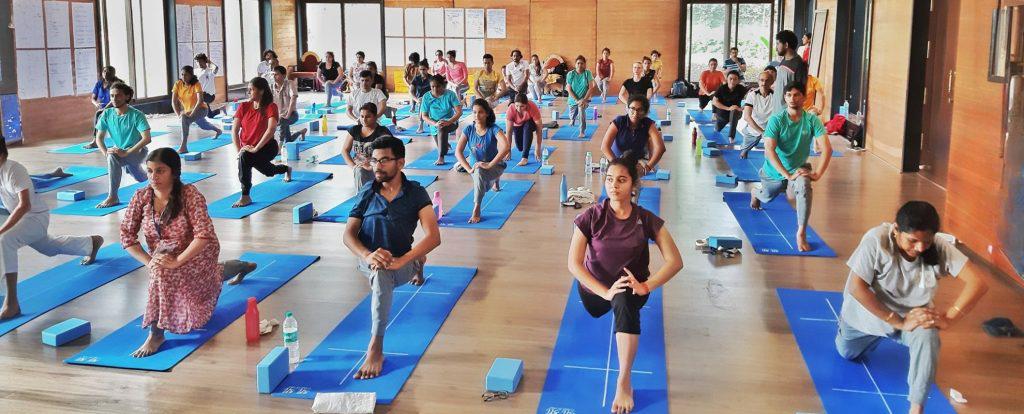
That evening, he sat in a Sri Sri Yoga class, staring at his instructor, whose skin seemed to have its own internal light source.
“Ma’am,” he whispered, “what expensive serum are you using? Because I’ve tried them all, and I still look like a wilted lettuce leaf.”
The teacher laughed, a warm sound that seemed to come from her belly. “Rohan, you’re trying to paint a house that has a broken plumbing system. You can’t scrub your way to a glow if your breath is shallow and your digestion is sluggish. In yoga, we say the skin is just the mirror of your inner Prana (life force). If the river is stagnant, the banks look dull.”
Rohan looked confused. “So, you’re saying I can breathe my way to better skin?”
“I’m saying when you move with awareness, you flush the toxins, calm the nerves, and let the blood actually reach your face. It’s not magic; it’s physiology meeting philosophy.”
In this guide, we’ll explore how moving beyond the surface of skincare can lead to the radiance Rohan was looking for. Here is what we will cover:
- The Ancient Connection: How Saucha (purity) leads to Tejas (radiance).
- The Science of the Glow: Breaking down the “Brain-Skin” axis and cortisol.
- 12 Essential Asanas: The specific “why” behind every movement.
- Breath & Beyond: Why Kapalabhati is called the “Skull-Shining” breath.
- Deepening the Journey: Authentic learning through the Sri Sri School of Yoga.
What Does Ancient Wisdom Say About Your Glow?
Long before the beauty industry became a multi-billion-dollar giant, the ancient sages understood that skin health was never a “surface” problem. In the Yoga Sutras of Patanjali, the concept of Saucha (one of the five Niyamas or personal observances) refers to purity. While we often think of this as just washing our bodies, the deeper meaning is the purification of the entire physical and mental system.
When the body is purified of Ama (toxins), a natural state of Tejas (radiance or spiritual lustre) arises. This isn’t something you apply; it’s something you uncover. In current times, we see this confirmed by the “Gut-Skin Axis”, the scientific reality that a clear digestive tract and a calm mind are the two greatest beauty secrets in existence.
What Does Science Say About Yoga and Skin?
The short answer is: a great deal, and it is worth paying attention to.
Cortisol is the stress hormone that most directly attacks your skin. When chronically elevated, cortisol breaks down collagen, triggers inflammation, and accelerates the appearance of fine lines, acne, and uneven tone. A study published in PMC via NIH confirms that regular yoga practice significantly reduces circulating cortisol. Lower cortisol means more preserved collagen.
Skin cells need oxygen to regenerate. Beyond stress hormones, yoga inversions and forward folds physically increase blood circulation to the face and scalp, delivering oxygen and nutrients directly to skin cells. As research in Alternative Medicine notes, this enhanced circulation promotes cellular regeneration and directly supports what practitioners recognise as the natural “yoga glow.”
By moving the body into “rest and digest” mode, yoga allows the body to prioritise repair over protection.
The 12 Yoga Asanas for Glowing Skin
A quick note before you begin: these asanas work best when practised consistently and with awareness of the breath.
| Asana | Sanskrit Name | Primary Skin Benefit |
| Cobra Pose | Bhujangasana | Reduces stress, opens chest for deeper breathing |
| Fish Pose | Matsyasana | Normalises hormonal balance, firms skin |
| Plow Pose | Halasana | Increases circulation to face and head |
| Shoulder Stand | Sarvangasana | Reduces acne, combats dullness, oxygenates skin |
| Triangle Pose | Trikonasana | Boosts oxygen supply to facial tissues |
| Child’s Pose | Shishuasana | Relieves stress and reduces cortisol |
| Standing Forward Bend | Uttanasana | Increases circulation to the scalp and face |
| Downward Dog | Adho Mukha Svanasana | Increases circulation to scalp and face |
| Camel Pose | Ustrasana | Stimulates thyroid, balances hormones |
| Bridge Pose | Setubandhasana | Improves thyroid function, reduces anxiety |
| Seated Forward Bend | Paschimottanasana | Supports digestion, reduces toxin accumulation |
| Half Spinal Twist | Ardha Matsyendrasana | Increases circulation to the face and head |
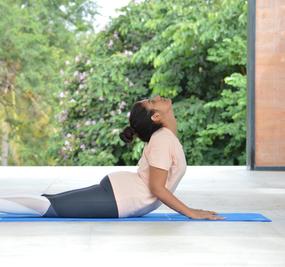
1. Bhujangasana (Cobra Pose)
The backbend in Cobra opens the chest and invites deeper, more complete breathing. This means more oxygen into the bloodstream, better circulation, and noticeably less tightness in the face and shoulders where stress tends to silently accumulate. Reduced muscular tension in these areas directly translates to less skin strain and a calmer, more open expression.
2. Matsyasana (Fish Pose)
Fish Pose is particularly beneficial for women because it gently stimulates the thyroid and parathyroid glands, which play a direct role in hormonal regulation. Hormonal imbalances are one of the most common causes of adult acne and uneven skin tone. Matsyasana also encourages deep diaphragmatic breathing, supporting both oxygen delivery and nervous system calm.
3. Halasana (Plough Pose)
Halasana reverses the habitual downward pull of gravity on facial tissues. Blood, oxygen, and nutrients flood toward the face and scalp. Practised regularly, this creates a cumulative improvement in skin tone that becomes visible over weeks of consistent practice.
4. Sarvangasana (Shoulder Stand)
This is one of yoga’s most celebrated inversions for a reason.
Sarvangasana directly increases blood supply to the brain and face, while the thyroid gland receives fresh stimulation due to the chin lock created in the pose. The result is improved hormonal activity, reduced puffiness, and noticeably better colour in the skin over time.
5. Trikonasana (Triangle Pose)
The triangle pose increases the flow of oxygenated blood to the face and head. It also stretches the muscles of the neck and chest, areas where tension quietly builds over long hours at a desk and quietly shows up in the face.
6. Shishuasana (Child’s Pose)
Do not underestimate this pose. Child’s Pose is a powerful parasympathetic activator, meaning it brings the body out of fight-or-flight and into the rest-and-repair mode that the skin desperately needs. Regular cortisol reduction, as science has shown, directly reduces inflammation in the skin. This pose is the simplest way to get there.
7. Uttanasana (Standing Forward Bend)
A forward bend inverts the head below the heart. Gravity works in the opposite direction for a change, sending fresh blood to the face. Combined with the calming effect on the nervous system, Uttanasana is one of the most accessible inversions available and consistently underrated for skin health.
8. Adho Mukha Svanasana (Downward Facing Dog)
Downward Dog is both a mild inversion and a full-body energiser. The increased blood flow to the scalp and face that happens here, combined with the lengthening of the spine and release of neck tension, creates the foundation for healthy circulation in the upper body.
9. Ustrasana (Camel Pose)
Ustrasana powerfully stimulates the thyroid gland. Since thyroid function governs metabolic rate, cellular repair, and hormonal balance, this pose has a meaningful downstream effect on how healthy and vibrant the skin appears. It also opens the chest fully, allowing deeper breath and better oxygen exchange.
10. Setubandhasana (Bridge Pose)
Bridge Pose stimulates the thyroid while calming the nervous system. It also gently compresses the throat, creating a similar effect to Sarvangasana in terms of thyroid and parathyroid activation. For those managing skin conditions related to anxiety and stress, the Bridge Pose practised at the end of a session creates a noticeable settling of the system.
11. Paschimottanasana (Seated Forward Bend)
This pose is your digestive ally. The Charaka Samhita’s warning about Agnimandya, impaired digestion, showing up in the skin, is well supported by modern understanding of the gut-skin axis. Paschimottanasana compresses the abdomen and stimulates the digestive organs, supporting the regular elimination of toxins that, when retained, show up as dullness, breakouts, and uneven tone.
12. Ardha Matsyendrasana (Half Spinal Twist)
The spinal twist directly stimulates the liver and kidneys, your body’s two primary detoxification organs. When these organs are functioning well, the skin is typically the first place you see it: clearer, more even, and noticeably more alive.
Does Pranayama Actually Change Your Skin?
Yes, and here is why it makes sense.
Every emotional state has a corresponding breath pattern, and every breath pattern has a measurable effect on the body’s chemistry. This is not philosophy. It is physiology.
Kapalabhati (Skull-Shining Breath) is perhaps the most directly skin-relevant pranayama practice. The name itself is telling: Kapala means skull or forehead, and Bhati means shining. Rapid, forceful exhalations followed by passive inhalations create intense abdominal movement, stimulate digestive function, clear stale air from the lower lungs, and increase oxygen saturation in the blood. Practised for ten to fifteen minutes daily, Kapalabhati is known to improve skin tone over the forehead and face over time.
Sheetali and Sheetkari Pranayama involve breathing in through a curled tongue or through the teeth, respectively. Both create a cooling, anti-inflammatory effect internally. For those with Pitta-dominant constitutions or oily, acne-prone skin that flares during summer months, these cooling techniques can be genuinely transformative.
Nadi Shodan Pranayama (Alternate Nostril Breathing) balances the left and right hemispheres of the brain and regulates the autonomic nervous system. Regular practice reduces baseline anxiety levels, which means lower cortisol, which means better skin. This is the chain of causation that ancient texts always pointed toward and that modern science continues to document.
The Jalneti technique, taught as part of Sri Sri Yoga programs, is a nasal cleansing practice with both physical and emotional cleansing effects. It clears the nasal passages and sinuses, reduces allergic responses that can manifest on the skin, and can be practised daily as a purification ritual.
What Else Supports the Yoga Glow?
Yoga creates the conditions. These practices sustain them.
Hydration and Ayurvedic nutrition. Warm lemon water first thing in the morning supports liver detoxification. Fresh fruits rich in Vitamin C support collagen synthesis. Papayas support gut health. Beyond specific foods, Ayurveda recommends eating according to your body constitution, Vata, Pitta, or Kapha, since what nourishes one type may aggravate another.
Adequate sleep. Cellular repair happens during deep sleep. No serum in the world can substitute for consistent, quality rest. When sleep improves, which it reliably does with regular yoga practice, skin regenerates more effectively overnight.
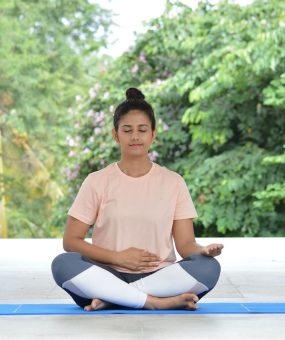
Meditation twice daily. Stress is the primary accelerator of skin ageing, and meditation is the most effective tool available for bringing the system back to balance. Long-term practitioners of meditation consistently display a quality of radiance in their skin that is observable to anyone in the room with them.
Natural skincare. Ayurvedic facial packs, Vitamin E oil, and regular oil massage suited to your body type all support the outer layer of skin in ways that complement what yoga is doing from the inside.
General Physical Contraindications
High Blood Pressure & Heart Conditions: Avoid holding inversions (Shoulder Stand, Plow) or intense backbends (Camel) for extended periods. These increase pressure in the head and chest. Instead, focus on gentle chest openers like Bridge Pose with support.
Disc Injuries & Chronic Back Pain: If you have a herniated disc or sciatica, avoid deep forward folds like Paschimottanasana. Keep your knees slightly bent and maintain a flat back to avoid compressing the spinal discs.
Pregnancy: Avoid all “prone” poses (lying on your belly) like Cobra or Bow. Also, skip deep twists and forceful abdominal breathing. Opt for wide-legged standing poses that create space rather than compression.
Recent Surgery: If you have had abdominal or spinal surgery, please wait for complete medical clearance before attempting any poses that stretch or compress those areas.
Specific Precautions for Kapalbhati (Skull-Shining Breath)
- Because Kapalbhati is a high-energy, “shining” kriya, it must be practised with care:
- Practising on a full stomach can lead to cramps or digestive distress. Ensure a gap of at least 3-4 hours after a heavy meal.
- The forceful exhalation can spike heart rate and blood pressure. Those with these conditions should skip Kapalbhati or practice extremely slow, gentle “soft” belly breathing only under expert supervision.
- Avoid if you have a hernia, gastric ulcers, or recent abdominal surgery, as the rapid muscle contractions can aggravate these areas.
- Strictly avoid during pregnancy. During the first 3-4 days of menstruation, it is best to skip this kriya to avoid increasing cramps or interrupting the downward flow of Apana Vayu.
- If you are prone to seizures or dizziness, the rapid breathing may trigger an episode. Always practice under the direct guidance of a senior Sri Sri Yoga teacher.
Already Practising? Here Is Where to Go Deeper.
If these practices are speaking to you and you want to understand them at a level that goes beyond the physical, the Sri Sri School of Yoga offers pathways for exactly that. Founded by Gurudev Sri Sri Ravi Shankar, recognised by Yoga Alliance USA since 2010 and certified by India’s Ministry of AYUSH, the school carries over 45 years of living tradition and has trained more than 11,000 teachers across 180 countries.
For those seeking a structured starting point, the Sri Sri Yoga Classes and Daily Online Yoga Classes offer guided practice led by experienced teachers. For those who want to go much further, the 200-Hour Yoga Teacher Training is one of the most thorough and authentic programs available, with residential, online, and hybrid formats to suit different lives and schedules.
Frequently Asked Questions
1. How long before I see a “Yoga Glow”?
Most people notice a change in their “vitality” almost immediately due to better circulation. For lasting changes in skin clarity or texture, a consistent 4-to-8-week practice is usually the tipping point.
2. Can yoga help with hormonal acne?
Yes. Poses such as Matsyasana and Ustrasana work on the thyroid and endocrine system, helping to balance the hormones that often trigger adult acne.
3. Is it okay to practice inversions with active acne?
Generally, yes, as inversions improve circulation. However, always listen to your body. If an inversion feels “throbbing” or uncomfortable, stick to gentler poses like Child’s Pose.
4. Why is digestion linked to skin?
In Ayurveda, “Agni” (digestive fire) determines how well you absorb nutrients. If digestion is weak, toxins (Ama) build up and often manifest as dull skin or breakouts. Poses like the Half Spinal Twist specifically target this.
5. Does meditation actually affect skin ageing?
Scientific research suggests that meditation increases telomerase activity—an enzyme linked to cellular longevity. Essentially, a calm mind helps your cells stay “younger” for longer.
6. What if I am not flexible?
Flexibility is a byproduct, not a requirement. The blood flows just as well in a “stiff” Triangle Pose as it does in a “flexible” one. Focus on the breath!
7. Can I learn these techniques online?
Yes! The Sri Sri School of Yoga offers classes that provide authentic, real-time guidance from certified instructors, ensuring you get the alignment right for maximum benefit.