

Rohan stared at his reflection in the gym mirror, aggressively rubbing an expensive “collagen-boosting” cream into his forehead.
“If I rub it clockwise, do you think it reverses time?” he asked, not breaking eye contact, his frown lines deepening.
Sunita, rolling out her yoga mat nearby, laughed. “Only if your skin can read a clock, Rohan. What’s the crisis?”
“I’m thirty-four going on eighty,” Rohan sighed, dropping the tube into his gym bag. “My lower back aches if I sleep wrong. My focus at work is shot. I’m exercising three times a week, taking care of my meals, but I still feel drained. The modern world is just one big, exhausting accelerator of old age.”
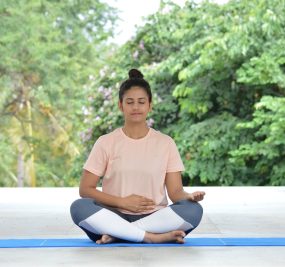
Sunita smiled, sitting cross-legged with effortless grace. “You’re working hard on the outside, Rohan. But aging isn’t just skin-deep; it’s cellular stress. In my Sri Sri Yoga classes, we look at it differently. True youthfulness isn’t about freezing your face; it’s about altering your internal cellular biology through breath and alignment.”
“Yoga?” Rohan looked skeptical. “I thought yoga was just stretching for flexible people.”
“It’s a biological reset,” Sunita corrected gently. “Ancient sages called it Kaya Kalpa—the science of rejuvenating the body. And modern science is finally proving them right. Want to drop the creams and learn how to actually change how you age from the inside out?”
If Rohan’s story sounds familiar, you are not alone. In a fast-paced world, stress, poor posture, and shallow breathing accelerate biological aging long before chronological numbers catch up.
Here’s the thing nobody tells you about anti-aging yoga: it was never about looking twenty-five forever. It’s about how gracefully, energetically, and comfortably you inhabit whatever age you actually are.
Why does the body age faster than it should?
Aging itself can’t be stopped. But the rate at which it happens is far more within our control than most people assume. A large body of research now links chronic stress to accelerated cellular aging, largely through its effect on telomeres, the protective caps at the end of our chromosomes that shorten every time a cell divides. Shorter telomeres are associated with age-related diseases including cardiovascular issues and neurodegeneration, and this shortening speeds up under prolonged stress, inflammation, and oxidative damage, according to a narrative review published in Cureus.
In other words, a large part of what we call “aging” is really the visible residue of years of unmanaged stress. Which is precisely where yoga’s real advantage lies. It doesn’t just work on the surface.
In the Hatha Yoga Pradipika, aging is described as the gradual depletion of Amrita (the nectar of youth) housed in the crown chakra, consumed by the metabolic fire of the lower body. Yoga is the physical technology designed to reverse this flow, preserving the body’s vital essence.
How Does Yoga Combat Biological Aging?
Long before “anti-aging” became a billion-dollar industry, Patanjali was writing about it. In the Yoga Sutras, he describes a state called kaya sampat, or bodily perfection, which he defines as beauty, grace, strength, and resilience (rupa lavanya bala vajra samhanana kaya sampat, Yoga Sutra 3.47), arising naturally from sustained yogic practice, as detailed in the Ministry of AYUSH’s own commentary on yogic health. Notice what’s missing from that definition: nothing about looking a certain age. Grace and vitality, not the erasure of years, was always the actual goal.
Ayurveda adds another layer through the concept of ojas, often translated as vital essence, the subtle reserve of energy and immunity that determines how radiant and resilient a person appears, regardless of their age on paper. Ojas is built through sound sleep, a settled mind, and food that is fresh, seasonal, and easy to digest, not through what’s applied topically.
Gurudev Sri Sri Ravi Shankar captures this integrated view simply: “There are four sources of energy: food, sleep, breath, and a calm mind” (from Management Mantras). Notice that none of the four require a prescription or a procedure.
Aging is not merely a consequence of time; it is an accumulation of chronic stress, cellular inflammation, and stagnant circulation. Yoga targets these primary drivers of biological decay through three distinct pathways:
1. Cellular Oxygenation and Detoxification
Shallow breathing starves cells of oxygen, leading to the accumulation of metabolic waste. Deep, rhythmic yogic breathing combined with structural twists creates a “squeeze and release” mechanism in internal organs, flushing out stagnant blood and flooding tissues with fresh, oxygenated blood.
2. Nervous System Regulation
Chronic stress keeps the body locked in a sympathetic (“fight-or-flight”) state, releasing cortisol that degrades skin elasticity, impairs memory, and damages digestion. Yoga shifts the body into the parasympathetic (“rest-and-digest”) state, allowing systemic repair and cellular healing to take place.
3. Hormonal and Structural Balance
Inversion postures alter the pressure gradient in the vascular system, improving lymphatic drainage and thyroid function, which regulates metabolism and skin health. Concurrently, weight-bearing yoga postures stimulate osteoblasts, preserving bone density as you grow older.
To understand how these physical mechanisms integrate with your body’s energetic subtle layers, exploring specialized curriculum like the authentic programs offered by the Sri Sri School of Yoga can bridge the gap between simple exercise and profound internal transformation.
What Are the Best Anti-Aging Poses to Practice Daily?
To turn back the biological clock, your daily practice should focus on spinal flexibility, inversion, and deep respiratory control. Here is a baseline sequence designed to target aging at its structural roots:
| Posture Name | Primary Anti-Aging Mechanism | Target Areas |
| Marjariasana (Cat-Cow Stretch) | Stimulates cerebrospinal fluid circulation and maintains spinal elasticity. | Entire vertebral column, neck, and shoulders. |
| Viparita Karani (Legs-Up-The-Wall) | Reverses gravitational pull, enhances lymphatic drainage, and reduces facial puffiness. | Cardiovascular system, pelvic floor, and facial skin. |
| Matsyasana (Fish Pose) | Regulates the thyroid gland, expands thoracic capacity, and improves deep breathing. | Throat, chest, and parathyroid glands. |
| Paschimottanasana (Seated Forward Bend) | Calms the central nervous system, stretches the spine, and improves digestive efficiency. | Hamstrings, lower back, and abdominal organs. |
None of these poses are secret. What matters is consistency and correct alignment, which is exactly why learning from a trained instructor is crucial.
The Power of Breath: Nadi Shodhan Pranayama
Beyond physical poses, the true secret to long-lasting youth lies in the regulation of Prana. Alternate Nostril Breathing (Nadi Shodhan) brings balance to the left and right hemispheres of the brain, reduces heart rate variability, and lowers anxiety. Regular practice balances the autonomic nervous system, providing a deep, sustainable rest that smooths away stress lines far more effectively than any topical cosmetic product.
Kapalbhati increases oxygenation and circulation to the facial capillaries, which is why regular practitioners often report reduced dark circles and a visible glow.
What lifestyle habits actually support these results?
The habits are less exciting than the postures, but they carry equal weight. Adequate hydration supports skin elasticity. Seven to eight hours of consistent sleep is when the body carries out most of its cellular repair. Two minutes of stretching every hour at a desk prevents the stiffness that ages joints faster than time alone would. And an Ayurvedic approach to eating, built around fresh vegetables, seasonal fruit, and minimal processed food, keeps digestion, and by extension skin and energy, functioning the way it’s meant to.
Take the Next Step in Your Yoga Journey
True youthfulness is an inside job, built on a foundation of authentic knowledge, regular sadhana, and expert guidance. If you are ready to move past superficial wellness trends and experience the profound, classical depths of this ancient science, consider elevating your practice. The comprehensive Sri Sri School of Yoga Teacher Training Courses provide the ideal environment to deepen your personal practice, learn scriptural accuracy from world-class masters, and gain the official credentials to share this life-transforming wisdom with others.
For visual guides on alignment and deep-dive wellness tips, explore practical tutorials directly on the Sri Sri School of Yoga YouTube Channel and start rewriting your biological clock today.
Begin gently. Practice regularly. Let yoga support you through every stage of life.