

What Is Yoga Nidra, Really?
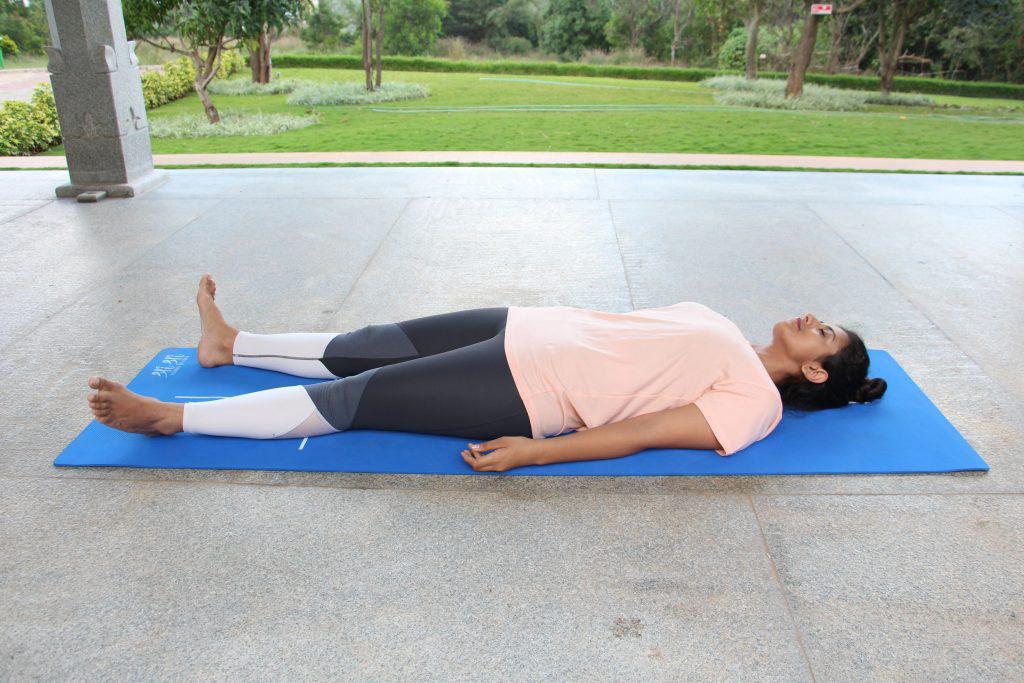
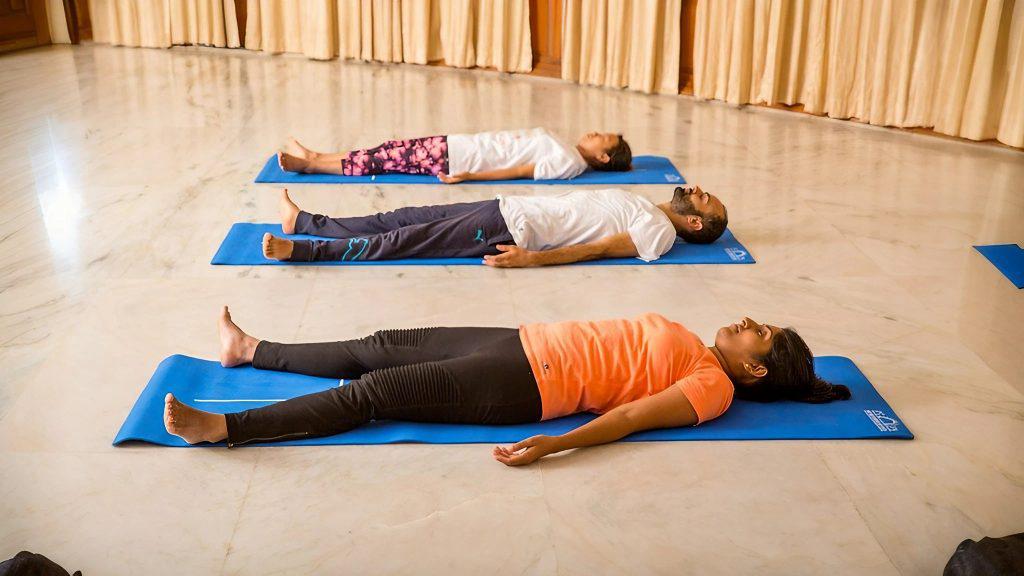
Yoga Nidra, literally “Yogic Sleep,” is a guided journey performed lying down in Shavasana (Corpse Pose). It leads you to the hypnagogic state: that thin, luminous threshold between being awake and being asleep.
The ancient texts knew this state well. The Mandukya Upanishad describes four states of consciousness:
- Jagrat (Waking)
- Swapna (Dreaming)
- Sushupti (Deep Sleep)
- Turiya, the “Fourth State,” the pure, transcendent awareness.
Yoga Nidra is the bridge to Turiya. It’s a state where your body is deeply asleep, but your consciousness is awake and observant. According to Adi Shankara, Yoga Nidra is described as going beyond all thoughts of the mind, sankalpa and vikalpa, and entering into Turiya, the fourth state of Self-awareness. It is the process of going beyond the “doing” of the mind to simply “being.”
The Science: Why Your Brain Loves This
During Yoga Nidra, your brain moves from Beta waves (active, logical, stressed) to Alpha and Theta waves (relaxed, creative, meditative).
A study published in Current Psychology showed that even an 11-minute Yoga Nidra session practiced over 30 days led to lower stress and significantly higher well-being. By slowing the brainwaves, you allow the central nervous system to shift into “Rest and Digest” (Parasympathetic dominance), which is often deeper than 4 hours of ordinary sleep.
9 Tips to Master Your Practice
To move from “thinking about your grocery list” to profound tranquility, use these teacher-tested tips:
1. The Power of the Sankalpa (Resolve)
What separates a nap from Yoga Nidra is your Sankalpa. The word comes from San (an idea formed in the heart) and Kalpa (a vow). Plant this short, positive, present-tense intention (e.g., “I am at peace”) at the start and end of your practice. In that “threshold” state, your subconscious is like fertile soil. Whatever you plant there grows.
2. Prepare the “Temple” (Your Environment)
Your body temperature drops when you go deep. If you are cold, your brain stays “on alert” to protect you.
- Use a light shawl or blanket.
- Dim the lights (light stimulates the visual cortex).
- Use an eye pillow to shut out the world.
3. The 2-Hour “Empty Belly” Rule
Trying to reach Turiya while your stomach is digesting a heavy meal is a losing battle. Digestion pulls energy (Prana) downward into the gut. For deep mental rest, practice at least two hours after eating.
However, in a practical daily routine, Yoga Nidra is often used as a therapeutic tool for digestion.
- The Post-Lunch “Dip”: After lunch, the body naturally enters a parasympathetic state to digest. By doing Yoga Nidra, then, you are essentially “supercharging” your body’s ability to process that meal.
- The Trade-off: You will likely be more groggy and “black out” (Sushupti) during a post-lunch session. That is perfectly okay if your goal is physical recovery. If your goal is meditation, the empty-stomach rule remains.
4. Transition with Asana and Breath
Don’t just collapse onto the mat after a busy day. Spend five minutes doing Sukshma Yoga (subtle joint rotations) or a few rounds of Nadi Shodhan (Alternate Nostril Breathing). This “shakes off” the surface stress, so your body is actually ready to be still.
5. Follow the Voice, Not the Words
The biggest mistake beginners make is trying to “analyze” the instructions. If the teacher says, “rotate awareness to the right thumb,” don’t think about your thumb; just let your mind hop there like a bird. If you miss a step, don’t worry. Just catch the next one.
6. Are You Releasing or Resisting? Let Go of the “Right” Experience
Here is one of the most liberating things a teacher can tell you: there is no correct way to experience Yoga Nidra. Sensations of falling, floating, warmth, or seeing lights are all normal. Feeling nothing in particular is also normal. Noticing a memory surface, or an emotion is absolutely normal.
Gurudev Sri Sri Ravi Shankar puts it simply and beautifully:
“Gently keep these three things in mind; I want nothing, I do nothing, I am nothing. And then totally let go. ”
The biggest block most people hit in Yoga Nidra is the subtle effort of trying to relax. The minute you start checking whether you’re relaxed enough, you’re not.
If a thought comes, don’t battle it. Acknowledge it with the soft gentleness of “yes, there you are,” and return your attention to the teacher’s voice.
7. Embrace the Noises
A car horn or a barking dog isn’t an “interruption”; it’s a tool for Pratyahara (withdrawal of the senses). Include the noise in your awareness: “I am aware of the sound, and it is part of this moment.” When you stop fighting the noise, it loses its power to distract you.
8. The Five-Sheath (Pancha Kosha) Awareness
For those who want to go deeper, we teach the Pancha Kosha framework from the Taittiriya Upanishad. Yoga Nidra is a journey through your five layers:
- Annamaya (Physical)
- Pranamaya (Energy)
- Manomaya (Mental)
- Vijnanamaya (Intellectual)
- Anandamaya (Bliss) By systematically relaxing each “sheath,” you reach the causal body—the source of
- true joy.
FAQ: Your Rest Questions Answered
Q: Can Yoga Nidra replace sleep?
A: It supplements it. While 20 minutes can feel like a 4-hour recharge, your body still needs natural sleep cycles for biological repair.
Q: Why do I feel groggy afterward?
A: You likely “woke up” from a deep sleep cycle. Always roll to your right side and sit up slowly to let your blood pressure and energy stabilize.
Q: Can I do this every day?
A: Yes! In the Sri Sri School of Yoga, we recommend it as a daily “internal shower” to clear the day’s stress.
Q: Is there a video to guide me?
A: Absolutely. Check out the guided sessions on our YouTube channel for a perfect 20-minute reset.
From Rest to Radiance
If these tips have sparked a shift in your practice, imagine what a structured foundation could do. At the Sri Sri School of Yoga, we believe that relaxation is a skill that can be mastered.
Whether you’re looking to heal from chronic stress in our Sri Sri Yoga Level classes or you feel the call to become a certified guide through our 200-hour Teacher Training, we offer a lineage-based path that is both ancient and scientifically verified.
Stop trying to “do” yoga. Start allowing yourself to “be” in yoga.
Explore all Sri Sri Yoga programs and Teacher Trainings here.