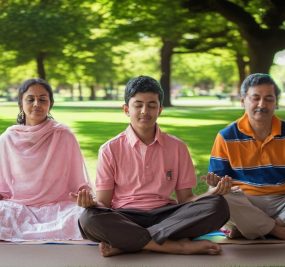


Are you tired of endless visualizations that yield zero results? In the modern quest for manifestation and the Law of Attraction, the most powerful secret lies in an ancient science: Yoga. This isn’t just about wishing; it’s about mastering your inner world so that outer success becomes inevitable. The yogic secrets to manifestation go beyond positive thinking—they provide a practical roadmap to purify the mind, align your energy, and transform your very identity into one that attracts its desires effortlessly.
Neuroscience confirms what yoga has recognized for centuries: focused attention and repeated mental training practices have the power to structurally and functionally rewire the brain’s neural pathways. This process, known as neuroplasticity, demonstrates that intentional mental effort is a biological mechanism for learning, adaptation, and shaping cognitive reality.
What You’ll Discover in This Article:
- The 8 timeless yogic secrets from ancient scriptures that accelerate manifestation
- How Patanjali’s Yoga Sutras provide a scientific framework for creating reality
- Practical techniques combining breath, meditation, and intention-setting
- Research-backed evidence connecting ancient wisdom to modern neuroscience.
1. What Is Sankalpa Shakti and Why Does It Matter?
The spiritual concept of Sankalpa (sacred intention) suggests that focused will is powerful. The concept of manifestation begins with Sankalpa, a term far deeper than a mere New Year’s resolution. From the Chandogya Upanishad comes the profound teaching: “You are your deep driving desire. As your desire is, so is your will. As your will is, so is your deed. As your deed is, so is your destiny.” Your Sankalpa is not about asking the universe for a house or a job; it’s a solemn, soul-aligned commitment made from a place of deep inner truth.
Modern neuroscience supports the idea that focused mental practice, such as intention-based meditation, structurally and functionally alters the brain. Research by neuroscientists like Dr. Andrew Newberg at Thomas Jefferson University and others has repeatedly shown that meditation and concentrated thought increase activity in the prefrontal cortex, the brain region critical for attention, planning, and goal-directed behavior. This biological process, known as neuroplasticity, explains how consistent, intentional practice can strengthen neural circuits related to achieving one’s goals.
Practical Application: During morning meditation, state your intention in the present tense. For example, “I am abundantly healthy” rather than “I want to be healthy.”
2. How Does Pranayama Activate Your Manifestation Power?
The journey to effective intention-setting begins with mastering your breath, or prana (life force). This principle is deeply rooted in ancient wisdom.
The concept that life force is the ultimate reality is central to yogic philosophy. Texts like the Kaushitaki Upanishad (3.2), summarized in later texts, contain the core teaching that Prana is Brahman (life force is the ultimate, divine reality). Ancient yogis understood that breath control is not just physical—it directly influences consciousness. This means that by controlling your breath, you gain a tool to manage your mind and, consequently, your experience of reality.
While “manifestation” is a spiritual term, the mechanism that makes focused intention effective is biological. Modern science confirms that specific breathing practices, like pranayama, profoundly regulate the nervous system.
Focused, rhythmic breathing techniques are scientifically proven to enhance Heart Rate Variability (HRV). A higher HRV is a robust indicator of heightened parasympathetic nervous system activity—the body’s “rest and digest” state.
- This is the calm, centered state where your brain is released from the chronic stress that blocks clear thinking. Emotional clarity, sharp focus, and reduced stress are essential to set clear goals and sustain the goal-directed action that leads to results.
In short, pranayama doesn’t grant wishes; it creates the optimal biological and mental environment for your intentions to succeed.
“Every emotion is connected with the breath. If you change the breath, change the rhythm, you can change the emotion.”
~ Gurudev Sri Sri Ravi Shankar
3. Can a Scattered Mind Manifest Anything Real?
Manifestation hinges on the clarity and purity of your inner signal. This is the role of Dhyana (meditation) and focused awareness. The Bhagavad Gita beautifully compares a yogi’s mind to a “lamp that does not flicker in a windless place.” A stable, focused mind attracts what it deeply desires.
Patanjali’s Yoga Sutras (3.1-3.3) describe Dharana (concentration), Dhyana (meditation), and Samadhi (absorption) as the three stages of manifestation mastery. Trataka, or steady-gaze meditation, trains these capabilities.
Patanjali’s Yoga Sutras also guide us through Pratyahara (withdrawal of the senses) and Tapas (self-discipline/purification). True transformation isn’t just about the external result; it’s about the internal change. You cannot manifest a grand new reality if your current identity rejects it. Yogic disciplines like consistent asanas (postures) and pranayama (breathwork) build the inner strength (Tapas) and self-awareness (Pratyahara) needed to shed the old, limiting identity. They lead to a powerful mental state that research shows enhances cognitive flexibility and better decision-making (NIH, 2011, Exploring the therapeutic effects of yoga).
Neuroscientist Dr. Tara Swart’s research (2023) shows that consistent visualization practices create the same neural pathways as actual experiences. Your brain literally cannot distinguish between vividly imagined and physically experienced events—this is why Olympic athletes use visualization techniques.
4. Why Do We Fail Even When We Act? (Karma Yoga)
The biggest block to manifestation isn’t inaction—it’s unaligned action motivated by desperation or lack. This is where the wisdom of Karma Yoga is essential. The Bhagavad Gita (2.47) teaches: “Karmanye vadhikaraste ma phaleshu kadachana” (You have the right to action alone, never to its fruits). This means you must take skillful action toward your goal, yet detach from the specific outcome.
The Modern Problem: Psychological perspectives suggest a high failure rate in manifestation is due to people “manifesting from scarcity, not abundance.” You might be acting, but if your inner energy vibrates “I don’t have enough,” you create resistance. Karma Yoga teaches you to act from a place of joy, service, and inner abundance, making your action a powerful magnet.
| Attached Action | Detached Action (Karma Yoga) |
| Creates anxiety and resistance | Generates flow and ease |
| Blocks manifestation | Accelerates manifestation |
| Depletes energy | Multiplies energy |
5. How Does Sattva Increase Manifestation Speed?
The Bhagavad Gita, Chapters 14 and 17, defines the three Gunas (qualities of material nature) and explains how they condition all human action, thought, and belief. Sattva increases manifestation speed because it brings Clarity and Alignment—the direct mental prerequisites for successful manifestation.
When the mind and actions are governed by Sattva, the following conditions are created, directly accelerating the manifestation process:
1. Clarity of Intention (Mental Pruning)
Sattva is the quality of illumination and knowledge (BG 14.6). A mind dominated by Sattva is calm and clear (manah-prasādaḥ).
- Effect on Manifestation: This mental clarity allows for the creation of a precise and pure intention ($Sankalpa$). In neuroscience terms, a clear intention sharpens the brain’s Reticular Activating System (RAS), which is the selective filter that makes the brain notice relevant opportunities. Without this clarity, the mind is distracted by Tamas (delusion) or Rajas (competing desires), making the target fuzzy.
2. Alignment with Universal Law (Harmonic Vibration)
Sattvic actions are defined as those done without desire for the fruit (selfless duty) and with a firm belief that the action is right (BG 17.11).
- Effect on Manifestation: This selfless motivation creates internal harmony. Since the intention is not driven by ego, fear, or greed, there is no psychological resistance (self-doubt, guilt). Manifestation is often framed as a process of resonance; a Sattvic state acts as a powerful, pure broadcast signal, free of the static generated by Rajasic anxiety or Tamasic negativity.
3. Focused Energy and Sustained Action
While Rajas provides the energy for action, Sattva provides the discipline and focus to sustain it effectively.
- The Rajasic Pitfall: The Rajasic person is driven by greed and attachment to the results (BG 14.7). Their actions are often frantic, leading to burnout, anxiety, and a quick shift of focus if immediate results aren’t seen, thereby slowing down the process.
- The Sattvic Path: The Sattvic person acts with steadfast resolve (dhṛti), applying consistent effort without emotional attachment to the outcome. This sustained, calm, and efficient energy ensures the “manifestation runway” is built quickly and without self-sabotage.
Contrast with Rajas and Tamas
The negative impact of the other Gunas makes the advantage of Sattva clear:
- Tamas (Inertia): Manifestation is blocked. The tamasic state is characterized by laziness, negligence, and delusion (BG 14.8). The person lacks the required energy or clarity to even formulate a goal, let alone take the necessary action.
- Rajas (Activity): Manifestation is agitated and distorted. The rajasic person acts intensely but with restlessness and anxiety. They manifest, but their intense attachment to the fruit of the action and their self-centered motivation often leads to mixed results, stress, and unhappiness even when the goal is achieved.
Sattvic Practices for Manifestation:
- Wake before sunrise (Brahma muhurta)
- Practice morning Asana, Pranayama & meditation
- Consume fresh, vegetarian foods
- Spend time in nature
- Engage in selfless service
6. Why Is Santosha (Contentment) Essential for Manifestation?
The idea that contentment helps you achieve what you desire seems illogical, but this concept is central to ancient wisdom traditions. This principle is best understood through the philosophy of yoga:
1. The Core Principle (Yoga Sutras)
The ancient text, Patanjali’s Yoga Sutras (specifically, Sutra 2.42), states: “Santoshad anuttamah sukha-labhah” (From contentment comes supreme happiness).
- What this means: Contentment (Santosha) is one of the essential practices (Niyamas) in yoga. It’s the practice of accepting and being at peace with the present moment and your current circumstances.
- The benefit: The result of true contentment isn’t merely peace, but the attainment of unsurpassed joy or supreme happiness.
2. The Paradoxical Power of Contentment
In a spiritual context, this creates a “paradox of desire”:
- Desire with desperation (driven by fear or a feeling of lack) often creates inner chaos and pushes the desired outcome away. This state of emotional agitation blocks clear thinking and effective action.
- Desire with contentment (driven by calm intention and acceptance of the present) creates inner stability. When you are content, your actions are motivated by clarity and joy, which makes you more effective and naturally “attracts” opportunities.
3. Spiritual Aphorism
This philosophical idea is often summarized by spiritual teachers across various traditions using a powerful aphorism (a concise statement of truth):
“When you are content with nothing, everything comes to you.”
This teaching emphasizes that true inner abundance (the feeling of having “everything”) is a prerequisite for achieving outer abundance, as it removes the mental block of feeling incomplete or desperate.
7. The Power of Sound & Vibration (Mantra Shakti)
The concept that sound is a precise technology for spiritual and psychological change is a cornerstone of Vedic philosophy, accurately described by the term Mantra Shakti (the power of sacred sound).
This idea is rooted in ancient scriptures like the Rigveda, which speaks of Vāc (Speech) as a fundamental, creative cosmic energy, not merely a form of communication. Traditional texts suggest that the universe itself originated from a primal vibration (often referred to as Nāda Brahma). Therefore, every sound carries a vibration that influences the internal environment.
A Mantra (from man– meaning mind and -tra meaning instrument) is a specific tool for the mind. It is a precisely structured utterance—a syllable, word, or phrase—designed to attune the mind-body system.
- Technology of Attunement: Consistent, rhythmic repetition of a mantra (Japa) bypasses the conscious, critical mind and directly influences the subconscious mind. This process helps to clear deep-seated mental impressions (vāsanas) and establish new, positive mental patterns.
- Vibrational Influence: The phonetic structure of these chants is believed to create specific and measurable vibrations within the body. These vibrations can slow down brainwave frequency, leading to deep relaxation and focused awareness (a form of brainwave entrainment).
- Beyond Affirmation: While a mantra functions like a powerful affirmation by focusing intent, its efficacy is traditionally believed to stem from its inherent sonic power (a pure cosmic vibration), making it a profound technology for achieving states of abundance and peace.
In essence, Mantra Shakti is a system that uses sound as a creative energy to purify the mind, balance the body’s subtle energy pathways, and connect the individual consciousness to a higher frequency.
8. The Ultimate Magnet: Gratitude and Service (Seva & Kritajñatā)
The Vedic and Yogic traditions identify gratitude and selfless action as fundamental practices for aligning one’s life with abundance. These concepts are known as Kritajñatā and Seva.
1. Gratitude (Kritajñatā)
Kritajñatā literally means “knowing what has been done” or “acknowledging good deeds.” It is considered the ultimate energetic magnet.
- How it Works: In this philosophy, practicing gratitude is much more than a positive emotion; it is an energetic statement. When you feel deeply thankful—not just for what you have, but even in advance for what you intend to receive—you shift your focus from a state of lack to a state of fullness. This signals to the universe that you are already in a receiving and abundant state.
2. Selfless Service (Seva) and Offering (Arpaṇa)
The tradition teaches that Seva (selfless service) and Arpaṇa (offering or surrender) align your personal energy with the flow of universal abundance.
- Seva: Engaging in service without expectation of return widens your sense of self beyond personal needs. This act of unselfish giving connects your actions to a purpose larger than yourself. By flowing energy outward, you automatically create space to receive.
- Arpaṇa: This practice involves offering the fruits of your actions to a higher purpose, ensuring that your motivation is pure and non-attached, which prevents ego-driven actions from creating karmic bondage.
3. The Highest Form of Worship
The spiritual teacher Gurudev Sri Sri Ravi Shankar encapsulates the practical power of this philosophy, stating:
“If you are grateful, gratitude will increase in you and you will be given more.”
This quote is accurate and verifies the modern application of the principle. It teaches that your internal state—one of happiness and gratitude—is the most potent form of spiritual alignment, which naturally leads to harmony and abundance in your external life.
FAQs
Q1: What is the difference between a Sankalpa and a goal?
A: A goal is usually external and quantifiable. A Sankalpa is a deep, soul-aligned resolve for your highest self, formulated in the present tense (e.g., “I am abundant and healthy”).
Q2: How does meditation help manifestation?
A: Meditation (Dhyana) stills the mind, removing mental fluctuations (vrittis) that create doubt and resistance. This clarity is essential for imprinting the Sankalpa on the subconscious.
Q3: Can I manifest something negative?
A: The yogic path emphasizes pure intention. While scattered, fear-based thoughts can attract confusion, a sincere Sankalpa from a pure mind (cultivated through practice) naturally aligns with the highest good.
Q4: Do I need to chant a mantra?
A: Chanting (Mantra Shakti) is highly effective as it aligns your vibration instantly. However, a heartfelt affirmation or even deep breathing with intention can also be used.
Q5: What is “aligned action” (Karma Yoga)?
A: It is taking action that is inspired, joyful, and devoid of desperation. You work diligently, but without obsessively worrying about the result, trusting the universe to handle the “how.”
Q6: How long does it take to manifest something?
A: The speed of manifestation depends entirely on the degree of your inner alignment (purity of mind, strength of faith, and authenticity of action). Consistency in practice is the key to speeding it up.
Ready to Cultivate the Inner Power to Manifest Your Destiny?
True manifestation is an inner science—the art of mastering your mind, breath, and energy. It is the real-world impact of true yoga.
If you are ready to move beyond just affirmations and learn the powerful, complete science of the mind as taught by ancient wisdom, there is no better path than becoming a certified teacher in the Sri Sri School of Yoga. Our Teacher Training Program (TTP) uniquely integrates these seven secrets into a daily, life-transforming methodology. You will learn the techniques that create the “pure mind” and gain the skill to live with authentic, unshakable intention.
👉 Transform Your Life, Then Transform the World. Enroll in the Sri Sri Yoga Teacher Training today and let your true self manifest!