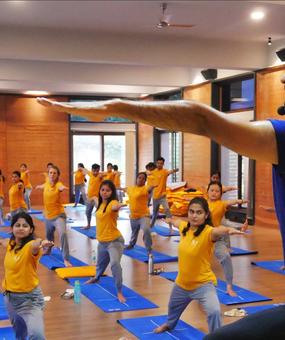


Meet Arjun. Arjun is a “Keyboard Warrior” in a high-rise office, but lately, his only battle is against a recurring crick in his neck and a wandering mind that seems to go on vacation every day at 3:00 PM.
Last Tuesday, Arjun was found staring intensely at a spreadsheet of quarterly projections. His colleague, Priya, a vibrant Sri Sri Yoga teacher, tapped him on the shoulder.
“Arjun, you’re holding your breath,” she whispered. “I’m not breathing, Priya, I’m optimizing,” Arjun snapped, though his shoulders were practically touching his earlobes. “Well, your spine looks like a question mark,” she chuckled. “If you keep sitting like that, your back is going to file a formal HR complaint against you.” “I don’t have time for yoga, Priya. I have back-to-back meetings!” “That’s the beauty,” Priya smiled, pulling up a chair. “Yoga isn’t just standing on your head; it’s about keeping your head while everyone else is losing theirs. Even five minutes of Sukshma Yoga at this desk can turn your ‘afternoon slump’ into an ‘afternoon jump’.”
Arjun tried a simple seated twist. He heard a pop, felt a rush of oxygen, and suddenly, the spreadsheet didn’t look so daunting.
That conversation sparked something in him. Within three months of incorporating office yoga into his routine, he wasn’t just surviving his workday; he was thriving. His story isn’t unique. Across corporate India and the world, professionals are discovering that the ancient wisdom of yoga offers surprisingly modern solutions to workplace stress.
In this article, you’ll discover:
- Why corporate professionals desperately need yoga (backed by research)
- Simple yet powerful yoga techniques you can practice at your desk
- How companies are transforming workplace wellness through yoga
- The remarkable benefits of dedicated corporate yoga programs
- Practical ways to start your office yoga journey today
Why is Sitting the New Smoking?
For centuries, humans were hunters and gatherers. Today, we are “clickers and scrollers.” According to research published in the Annals of Internal Medicine, sedentary behavior is linked to a significantly higher risk of cardiovascular disease and type 2 diabetes.
In the ancient Patanjali Yoga Sutras, the definition of Asana is “Sthira Sukham Asanam”;a posture that is stable and comfortable. Ironically, our ergonomic office chairs are designed for comfort, yet they lead to physical instability. When we sit for prolonged periods, our “Prana” (life force energy) stagnates, leading to that heavy, foggy feeling we call “brain fog.”
Why Do Office Workers Need Yoga More Than Ever?
Let’s talk numbers. According to a study published by the American Institute of Stress, workplace stress costs businesses over $300 billion annually in healthcare and missed work. In India, a ASSOCHAM survey revealed that 40% of corporate employees in metro cities suffer from depression or anxiety disorders.
The culprits? Long sitting hours, deadline pressure, poor posture, irregular eating, and the blur between work and personal life that smartphones have created.
Our ancestors didn’t have ergonomic chairs or standing desks, but they had something far more powerful;the science of yoga, documented over 5,000 years ago. Patanjali’s Yoga Sutras describe yoga as “chitta vritti nirodha”;the calming of the fluctuations of the mind. In modern language? It’s your reset button for mental chaos.
The beautiful part? You don’t need a yoga mat or special clothes. Office yoga meets you exactly where you are at your desk, in your work clothes, ready to transform those tense shoulders and scattered thoughts.
How Does Yoga Boost Productivity?
The corporate world often views rest as the enemy of work. However, the Vedas suggest that “Rest is the basis of activity.” This isn’t just spiritual philosophy; it’s biological fact.
A study conducted by the International Journal of Yoga highlights that yoga significantly improves focus and reduces cortisol levels (the stress hormone). By integrating Corporate Yoga, companies aren’t just helping employees feel better;they are improving the bottom line through reduced absenteeism and higher engagement.
“Health is not just the absence of disease. It is the presence of enthusiasm, a clear mind, and a stress-free life.” ; Gurudev Sri Sri Ravi Shankar
What Makes Yoga Perfect for the Office Environment?
Unlike gym workouts that require changing clothes and showering, yoga adapts beautifully to office constraints. Here’s why it’s the ideal workplace wellness tool:
1. No Equipment, No Excuses
Your body is the only tool you need. Whether you’re in a cubicle, a conference room, or working from your dining table, yoga is accessible.
2. Time-Efficient
Even 5-10 minutes of targeted practice can shift your energy, focus, and mood. Perfect for lunch breaks or that mid-afternoon slump.
3. Immediate Results
Unlike fitness programs that show results over weeks, yoga’s calming effect on the nervous system is almost instantaneous. One proper breathing cycle can reduce cortisol (stress hormone) levels.
4. Ancient Wisdom Meets Modern Science
The Upanishads speak of “prana” (life force energy) flowing through “nadis” (energy channels). Modern science calls it oxygen flowing through your circulatory and nervous systems. Different languages, same truth;proper breathing changes everything.
As Gurudev Sri Sri Ravi Shankar beautifully puts it, the quality of our life depends on the quality of our mind.
Which Yoga Practices Work Best at Your Desk?
Let me share practical techniques that transform your workday without leaving your desk:
Simple Desk Yoga Sequence (15 Minutes)
| Practice | Duration | Benefits |
| Neck Rolls | 2 minutes | Releases tension from screen time |
| Seated Cat-Cow | 3 minutes | Improves spinal flexibility |
| Shoulder Shrugs | 2 minutes | Relaxes upper back and shoulders |
| Wrist & Ankle Circles | 2 minutes | Prevents repetitive strain injury |
| Seated Spinal Twist | 3 minutes | Aids digestion and detoxification |
| Desk Forward Fold | 3 minutes | Calms nervous system |
Breathing Techniques That Transform Stress
1. Nadi Shodhana (Alternate Nostril Breathing) This ancient pranayama balances the left and right hemispheres of your brain. Research from the International Journal of Yoga shows it significantly reduces stress markers and improves cognitive function.
How to do it: Close your right nostril, inhale through the left. Close left, exhale through right. Inhale right, close right, exhale left. That’s one cycle. Do 5-10 cycles.
2. Bhramari (Humming Bee Breath) Patanjali describes pranayama as the fourth limb of yoga. Bhramari specifically calms the mind by creating vibrations that soothe the nervous system.
How to do it: Close your ears with your thumbs, eyes with your fingers. Inhale deeply, then exhale while making a humming sound like a bee. Instant calm.
The beauty of these practices is their simplicity. The Sri Sri School of Yoga has been teaching these time-tested techniques to corporate professionals across 180 countries, helping them reclaim their vitality and focus. Their corporate wellness programs are specifically designed for busy professionals who want maximum benefits in minimum time.
The 20-20-20 Breath: Every 20 minutes, look 20 feet away for 20 seconds and take five deep, conscious breaths.
For a visual guide on such movements, check out the Sri Sri School of Yoga YouTube Channel, which offers excellent sequences for neck and back relief.
Is Workplace Stress Cultural or Physical?
The Bhagavad Gita describes yoga as “Karmasu Kaushalam”;excellence in action. True excellence doesn’t come from working 14 hours straight; it comes from the quality of mind you bring to those hours.
The current market trend shows a massive shift toward “Mindful Leadership.” Companies like Google and Nike have integrated mindfulness, but the roots go back to the Upanishads, which taught the mastery of the mind as the highest form of education.
The Hybrid Model
Post-pandemic, companies are offering both in-person and virtual yoga sessions. This flexibility ensures participation regardless of where employees work.
What Are the Proven Benefits of Regular Office Yoga?
Physical Benefits
- Posture Correction: Counteracts the forward-slouching position of desk work
- Pain Management: Reduces chronic neck, shoulder, and lower back pain
- Energy Boost: Increases oxygen flow, combating afternoon fatigue
- Immunity: Regular practice strengthens the body’s defense mechanisms
Mental Benefits
- Stress Reduction: Lowers cortisol and activates the parasympathetic nervous system
- Enhanced Focus: Improves concentration and decision-making abilities
- Emotional Balance: Helps manage workplace frustrations and interpersonal challenges
- Better Sleep: Evening stress release leads to improved sleep quality
Professional Benefits
- Increased Productivity: More energy and focus translate to better work output
- Improved Team Dynamics: Group yoga sessions build camaraderie
- Reduced Absenteeism: Healthier employees take fewer sick days
- Enhanced Creativity: A calm mind is a creative mind
The Bhagavad Gita (Chapter 6, Verse 17) speaks of the importance of balance: “Yoga is not for one who eats too much or eats too little, nor for one who sleeps too much or too little.” This ancient wisdom about balanced living is particularly relevant for today’s professionals struggling with work-life integration.
How Can You Start Your Office Yoga Journey Today?
For Individuals:
Week 1: Build Awareness
- Set hourly reminders to check your posture
- Take three conscious breaths before responding to stressful emails
- Do gentle neck rolls every time you feel tension building
Week 2: Add Movement
- Practice the 15-minute desk sequence daily (refer to the table above)
- Take walking meditation breaks instead of scrolling breaks
- Try one pranayama technique before lunch
Week 3: Deepen Your Practice
- Join a structured program for proper guidance
- Explore longer practice sessions during lunch breaks
- Share your experience with colleagues and create accountability
For Companies:
- Start Small: Offer weekly 30-minute sessions
- Create Space: Designate a quiet area for practice
- Make it Accessible: Offer both in-person and virtual options
- Measure Impact: Track participation and gather feedback
- Invest in Quality: Partner with certified instructors
Frequently Asked Questions About Office Yoga
1. Do I need prior yoga experience to start office yoga? Absolutely not! Office yoga is specifically designed for beginners. The practices are simple, safe, and can be modified for any fitness level. You’ll learn as you go.
2. What should I wear for yoga at the office? Your regular work clothes are fine! Choose office yoga practices that don’t require floor work or intense stretching. Loosen your tie or belt if needed, and you’re set.
3. How much time do I need to dedicate daily? Even 10 minutes makes a difference. Ideally, practice 15-20 minutes during lunch or breaks. The key is consistency, not duration.
4. Will my colleagues think it’s weird if I do yoga at my desk? Initially, maybe! But when they see you’re less stressed, more energetic, and productive, many will want to join you. Lead by example.
5. Can yoga really help with serious back pain from sitting? Yes, research shows that regular yoga significantly reduces chronic back pain. However, if you have severe issues, consult a doctor first and work with a certified instructor who can modify poses for your condition.
6. Is office yoga enough, or should I join regular classes too? Office yoga is fantastic for maintaining wellness throughout your workday. For deeper benefits;strength building, flexibility, and comprehensive practice;complementing it with regular classes is ideal. Many professionals do brief office yoga during work hours and longer sessions 2-3 times weekly.
7. How do breathing exercises help with workplace stress? Breathing techniques directly affect your autonomic nervous system. Deep, conscious breathing activates the parasympathetic (rest and digest) response, counteracting the sympathetic (fight or flight) stress response. It’s biology, not magic!
8. What’s the difference between office yoga and regular yoga classes? Office yoga is adapted for workspace constraints;chair-based, requires minimal space, done in work clothes, and focuses on quick stress relief and posture correction. Regular classes offer comprehensive practice including floor poses, longer sequences, and deeper relaxation.
9. Can I practice office yoga if I have health conditions like hypertension or diabetes? Generally, yes;yoga can actually help manage these conditions. However, always consult your healthcare provider first. Inform your yoga instructor about any health conditions so they can suggest appropriate modifications.
10. How long before I see results from office yoga? You’ll feel immediate benefits;more energy, reduced tension;after your first session. For lasting changes in flexibility, posture, and stress management, practice consistently for 3-4 weeks. Long-term transformation happens with regular practice over months.
The Sri Sri School of Yoga offers comprehensive corporate yoga programs tailored to organizational needs;from one-time workshops to ongoing wellness partnerships. Their certified teachers bring authentic yogic wisdom combined with an understanding of modern workplace challenges.
If you’re serious about taking your practice deeper, the Sri Sri School of Yoga offers specialized training that goes beyond basics. Their Yoga Teacher Training programs are designed for those who want to not just practice yoga but truly understand its science and eventually share it with others. Whether you’re looking to teach professionally or simply deepen your personal practice, their comprehensive curriculum, rooted in authentic yogic traditio,n offers transformational learning.
Start today. Breathe deeply. Move mindfully. Transform your workday!