

By Dr. Ashis Das
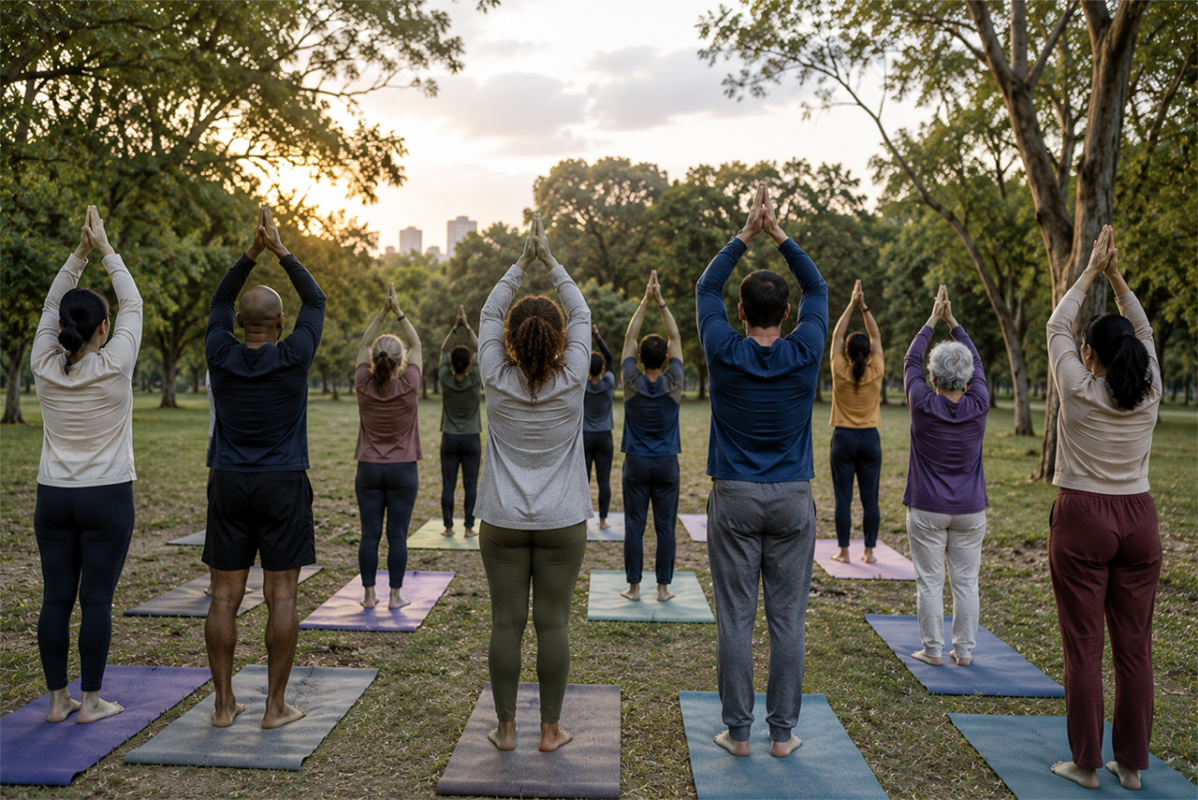
Each year on the summer solstice, more than a billion people in over 190 countries pause to breathe, stretch, and move together. This year, the 12th International Day of Yoga arrives with a theme that is both ancient and urgent: what does it mean to grow old — and can yoga help us do it well? The world is aging faster than at any point in recorded history. The global population over 60 is projected to double by 2050, placing an extraordinary burden on healthcare systems built around cure rather than prevention. This year’s theme is framed as a direct response to that reality — yoga as a low-cost, scalable, evidence-supported tool for the coming longevity crisis.
But what exactly does the science say? Increasingly, the answer is: quite a lot.
The biology of aging — and where yoga fits
Aging is not a single process. It is a cascade of interconnected changes: cells divide less faithfully, inflammation accumulates, muscles weaken, balance falters, and the mind’s retrieval speed slows. The World Health Organization, in its Decade of Healthy Aging (2021–2030), defines the goal not as the absence of disease but as the preservation of functional ability — the capacity to do the things that matter to you.
What makes yoga unusual among lifestyle interventions is that it appears to address multiple aging pathways simultaneously — not one organ or one system, but the whole person. A recent review described yoga as one of the most comprehensively beneficial interventions studied, affecting biological aging, brain health, cardiovascular function, immune response, and psychological resilience at once.
The cellular clock: yoga and telomeres
One of the most fascinating areas of modern yoga research focuses on telomeres—the protective structures found at the ends of chromosomes that naturally shorten as cells divide and as the body experiences chronic stress. Telomere shortening has been linked to biological aging, cognitive decline, and an increased risk of age-related diseases. Emerging evidence suggests that yoga may help support cellular health. Research has found that experienced yoga practitioners tend to have longer telomeres than non-practitioners of similar age, while more recent studies indicate that even a relatively short period of consistent practice can positively influence markers associated with telomere maintenance. Scientists believe this connection may stem from yoga’s ability to reduce chronic stress and lower cortisol levels, a hormone closely associated with accelerated cellular aging.
The brain that bends: yoga and cognition
Falls are the leading cause of injury-related death in adults over 65, but cognitive decline is the loss that people fear most. A 2024 UCLA study found that among women over 50 with self-reported memory issues and cardiovascular risk factors, 12 weeks of yoga, specifically with breath work and meditation, produced unique cognitive benefits that outperformed a structured memory enhancement training program. Yoga and meditation improve mental clarity, concentration, and memory, helping to counteract the cognitive slowing that typically accompanies aging.
Bones, balance, and the body’s architecture
One in three adults over 65 falls each year, and a hip fracture in the context of low bone density carries mortality odds that rival many cancers. Yoga addresses this risk through multiple concurrent mechanisms — and a growing body of evidence now quantifies each one.
On balance, the case is strongest. A 2023 meta-analysis in the International Journal of Older People Nursing — drawing on eleven databases and adults aged 60 and above — found a better balance than Tai Chi and other low-intensity comparators. A 2026 controlled trial conducted among adults aged 65–85 found significant improvements in balance, mobility, and fear of falling — while the control group deteriorated over the same 12 weeks.
On bone, a PLOS ONE meta-analysis of 11 studies and 591 participants further found consistent bone mineral density benefits at the lumbar spine and femoral neck — the fracture sites that matter most. The synthesis is straightforward: yoga improves postural stability through neuromuscular training, strengthens bone through mechanical loading, and reduces fear of falling through breath and attentional practice. No single drug does all three.
Why this theme, why now
The timing is not symbolic—it is demographic. By 2050, the global population aged 60 and older will reach 2.1 billion, nearly double its share of the population compared with 2015. The number of people aged 80 and above is expected to triple. No healthcare system was designed for this scale of population ageing. Against this backdrop, the 2026 theme reflects a shift in how yoga is viewed: not as an annual celebration, but as a practical tool for preventive health. Accessible, low-cost, and requiring no special equipment, yoga is one of the few interventions that can be adopted widely across populations. Growing research also links regular practice to improvements in balance, mobility, cognitive function, and cardiovascular health.
As governments and health systems grapple with the realities of longer life expectancy, the 12th International Yoga Day arrives at a pivotal moment. This year’s theme recognizes that healthy ageing is no longer a future challenge—it is a present one, and yoga may be part of the solution.
Disclaimer: The information provided in this article is for educational purposes only and is not intended to replace the advice of your healthcare provider. Always consult your healthcare provider before beginning any new exercise program, including yoga, especially if you have a pre-existing medical condition. While every effort has been made to ensure the accuracy of the information presented, the author and publisher cannot be held responsible for any errors or omissions or for any consequences resulting from the use of this information.
About the Author: Dr. Ashis Das is a physician with a Doctorate in Public Health from the University of London. He is a certified yoga teacher and passionate about social transformation through effective preventive, promotive, and curative practices. Dr. Das has taught yoga to children, adults, and seniors across four continents, blending yoga, yoga therapy, Ayurveda, and music therapy. He has collaborated with global agencies like WHO, Unicef, and the World Bank, assisting several countries in experimenting with innovative health solutions. Dr. Das generates and synthesizes scientific evidence on yoga and related practices for health and well-being, and has published more than 100 scientific articles and reports. He can be followed on Facebook and LinkedIn.
